
Posted by Steve Head on 11th Mar 2026
When Finish Reveals the Figure: Fiddleback Walnut Faceplates
Fresh lacquer went onto a pair of fiddleback walnut cajon faceplates in the shop this week, and as always, the moment the finish hits the surface the wood begins to change.
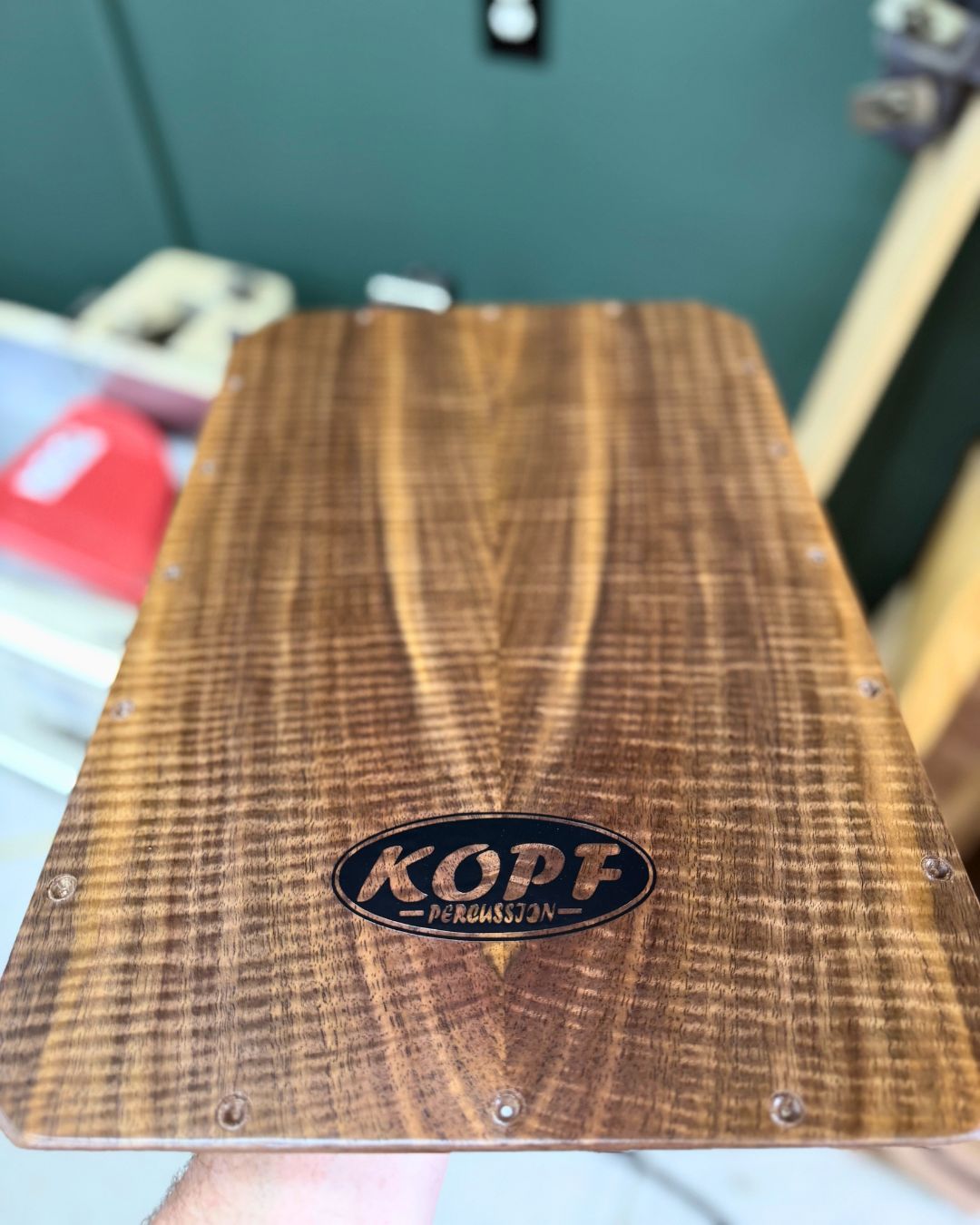
Before finishing, figured walnut can look fairly quiet. The grain is there, but it sits beneath the surface of the wood. Once lacquer is applied, the depth of the figure begins to reveal itself. The ripple that gives fiddleback walnut its name starts to move across the surface as the light shifts.
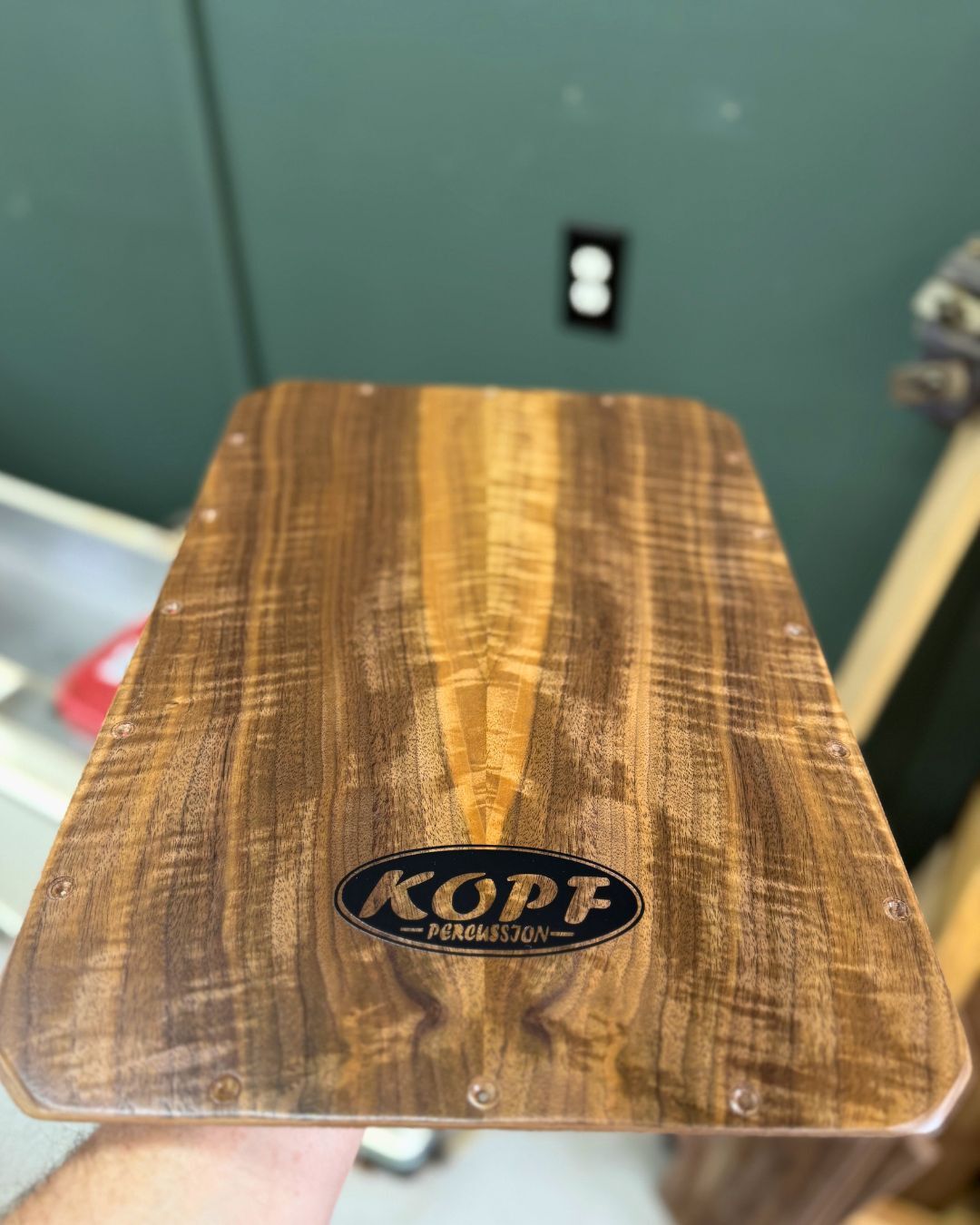
These particular veneers are bookmatched, meaning the two halves are cut from the same piece of wood and opened like a book so the grain mirrors itself across the centerline. When the figure is strong, that symmetry creates a kind of natural rhythm in the faceplate.
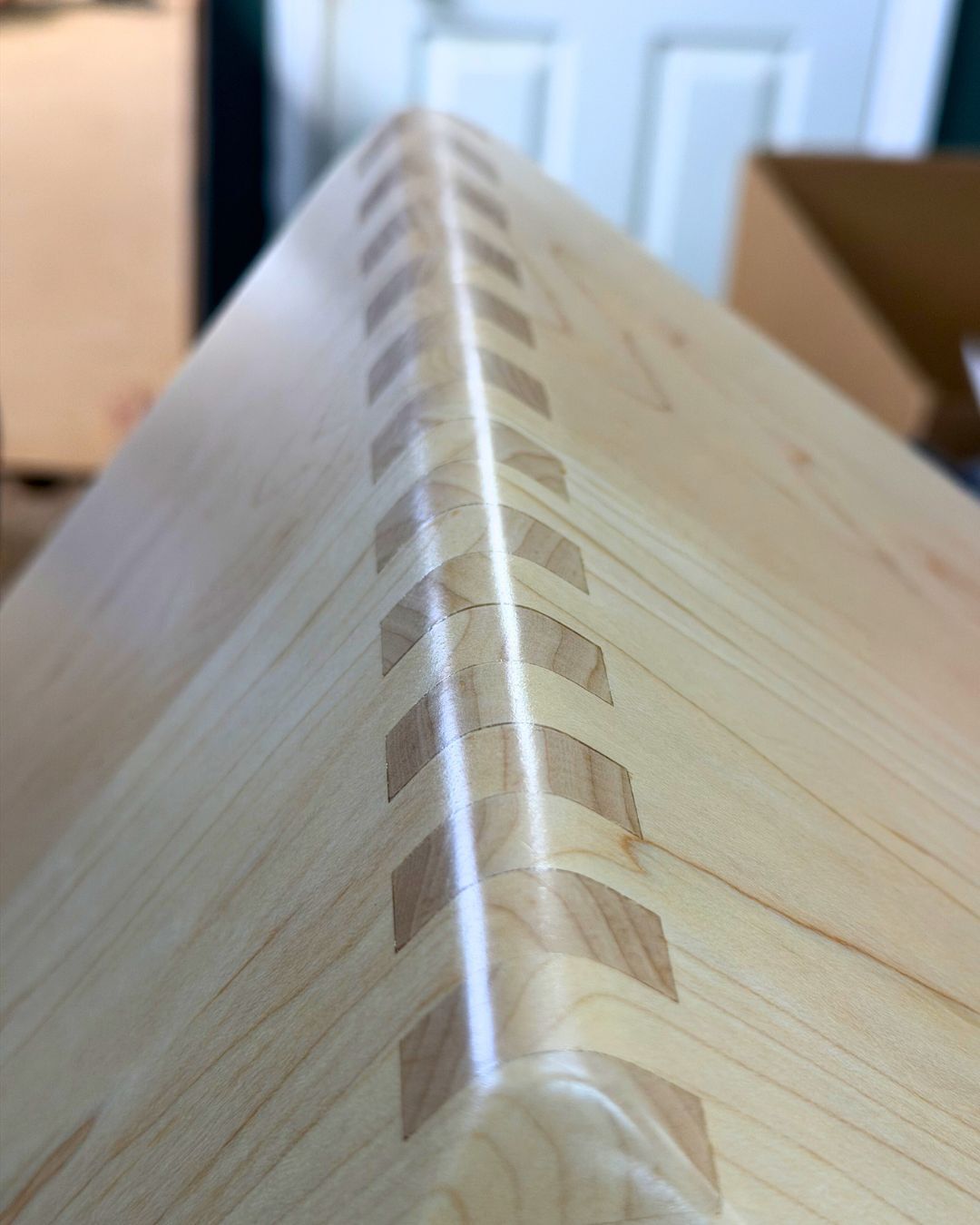
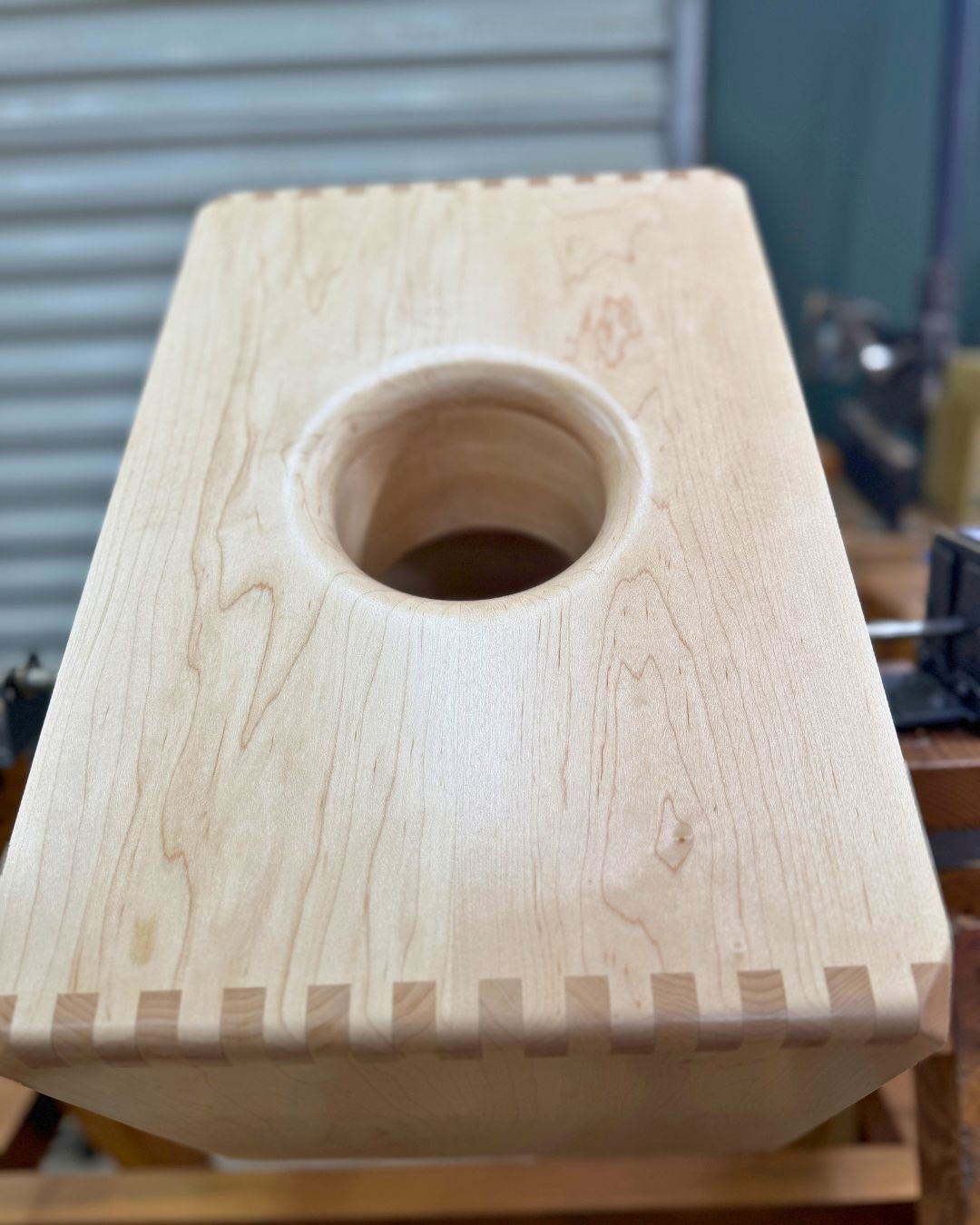
The body of this cajon is built from hard maple using box joint construction for strength and stability. At this stage the drum is still in the middle of the build process, but once the finish starts to bring the wood to life you begin to get a sense of what the final instrument will look like.
Moments like this are always a reminder that much of the character of an instrument is already present in the wood itself. The builder’s role is often simply to reveal it.